

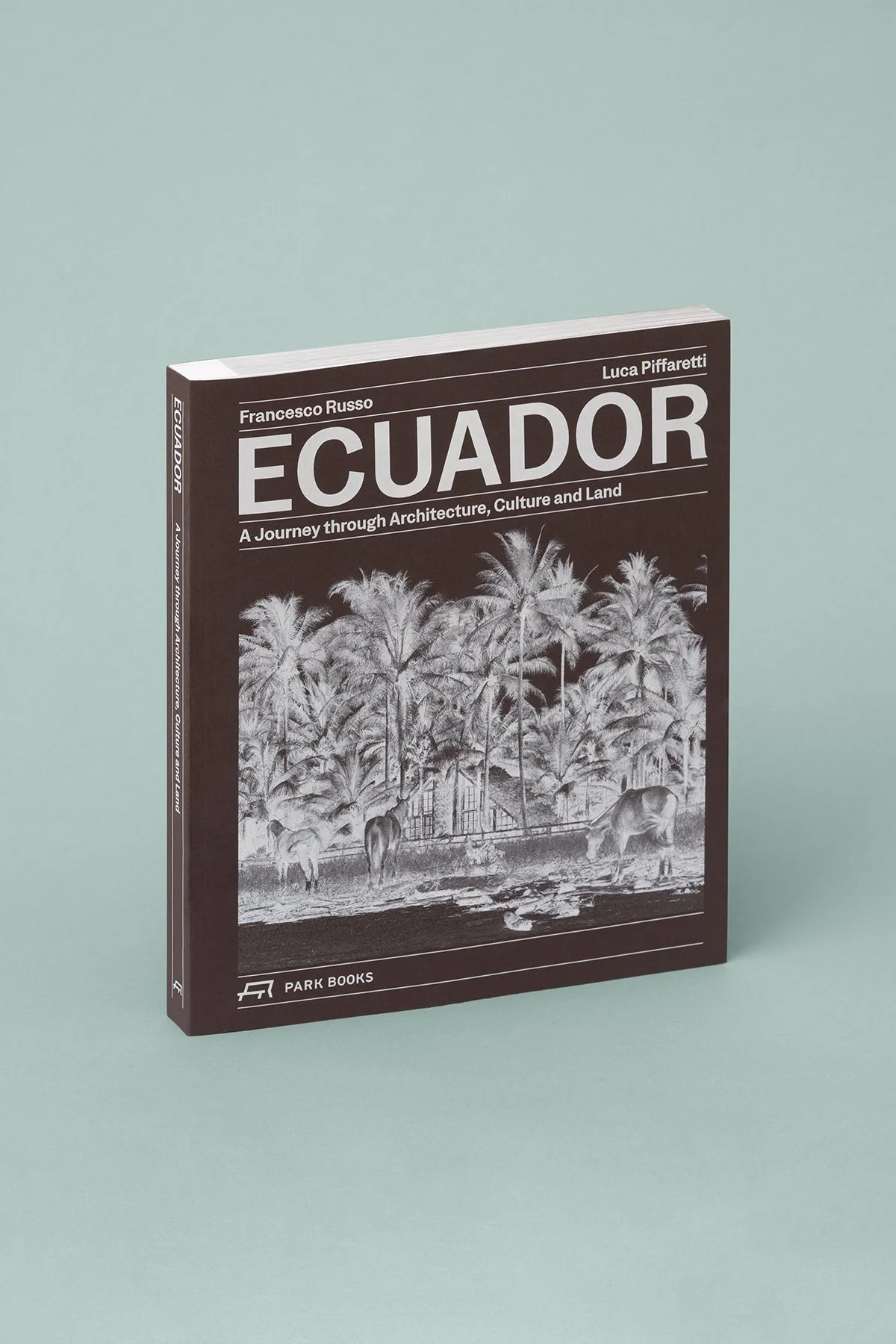
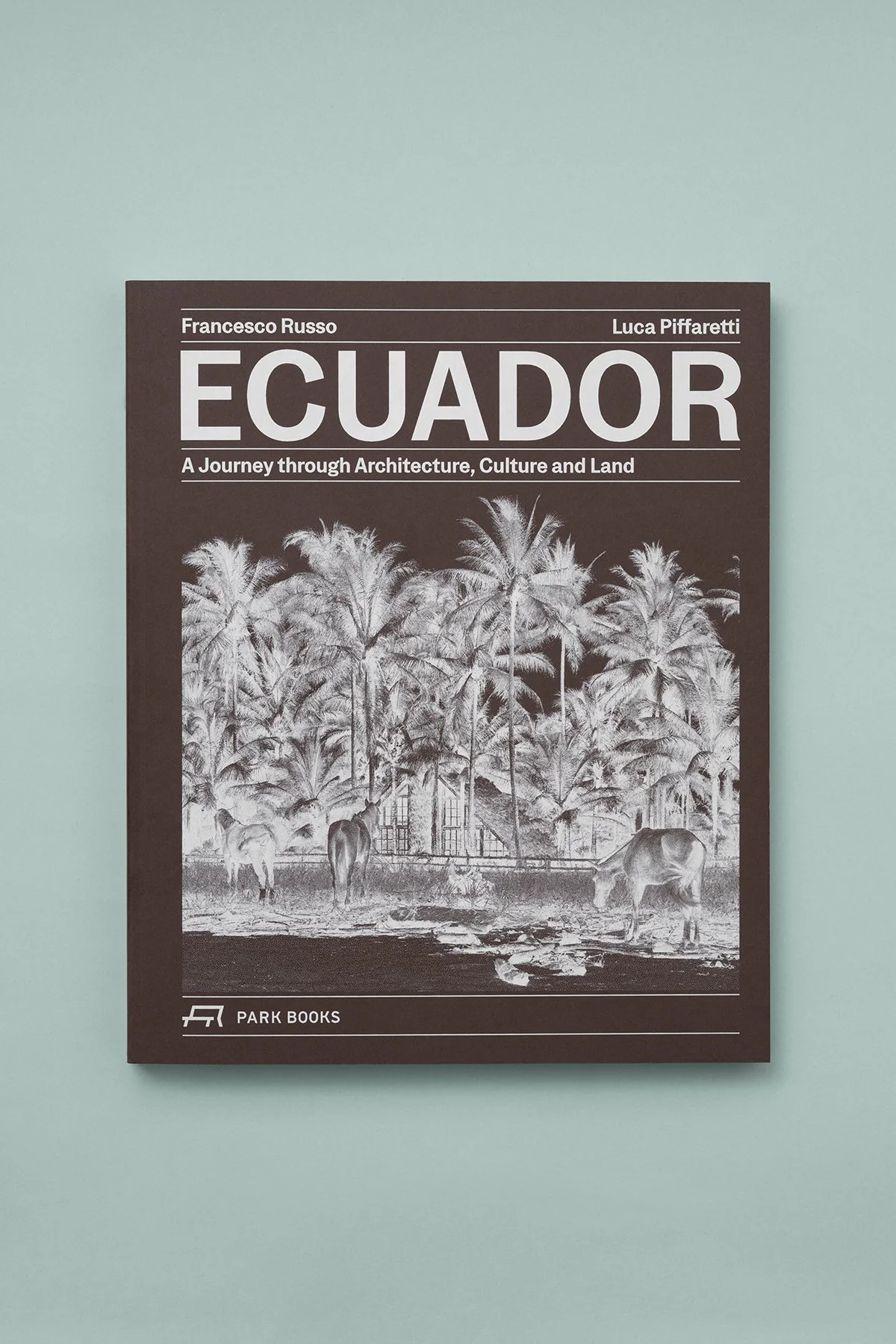
ECUADOR
A Journey through Architecture, Culture and Land
Book Launch Events
Join the photographers and authors of Ecuador: A Journey through Architecture, Culture and Land for a series of presentations of their newly published photobook.
Treviso
→ Details & RSVP
Thu 3 Dec
6.00 PM
@ Clinicaurbana
Mendrisio
→ Details & RSVP
Wed 9 Dec
6.00 PM
@ LaFilanda
Zurich
→ Details & RSVP
Thu 10 Dec
7.00 PM
@ Never Stop Reading

FAQ
-
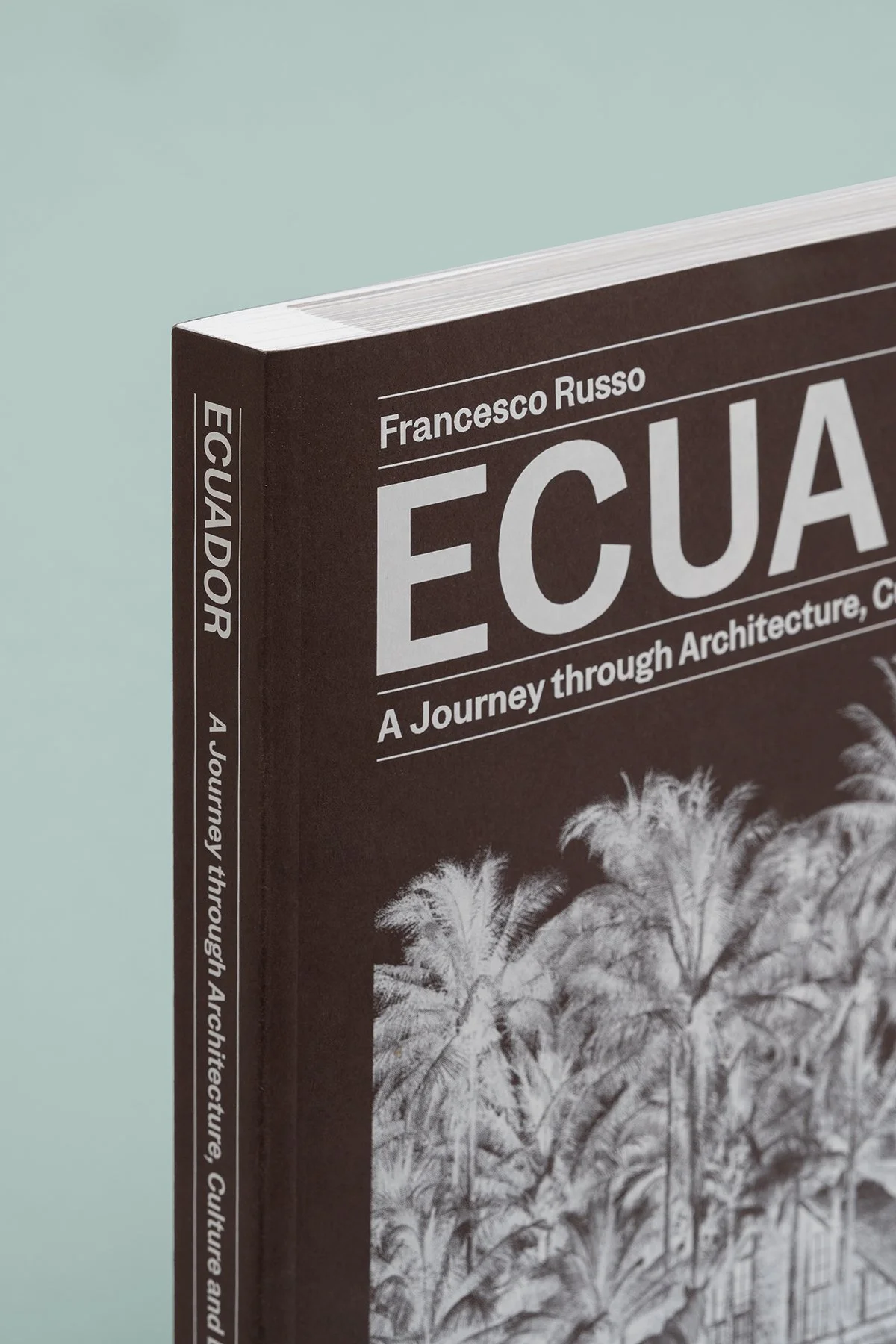
Title: Ecuador: A Journey Through Architecture, Culture and Land
Size: 23×28 cm
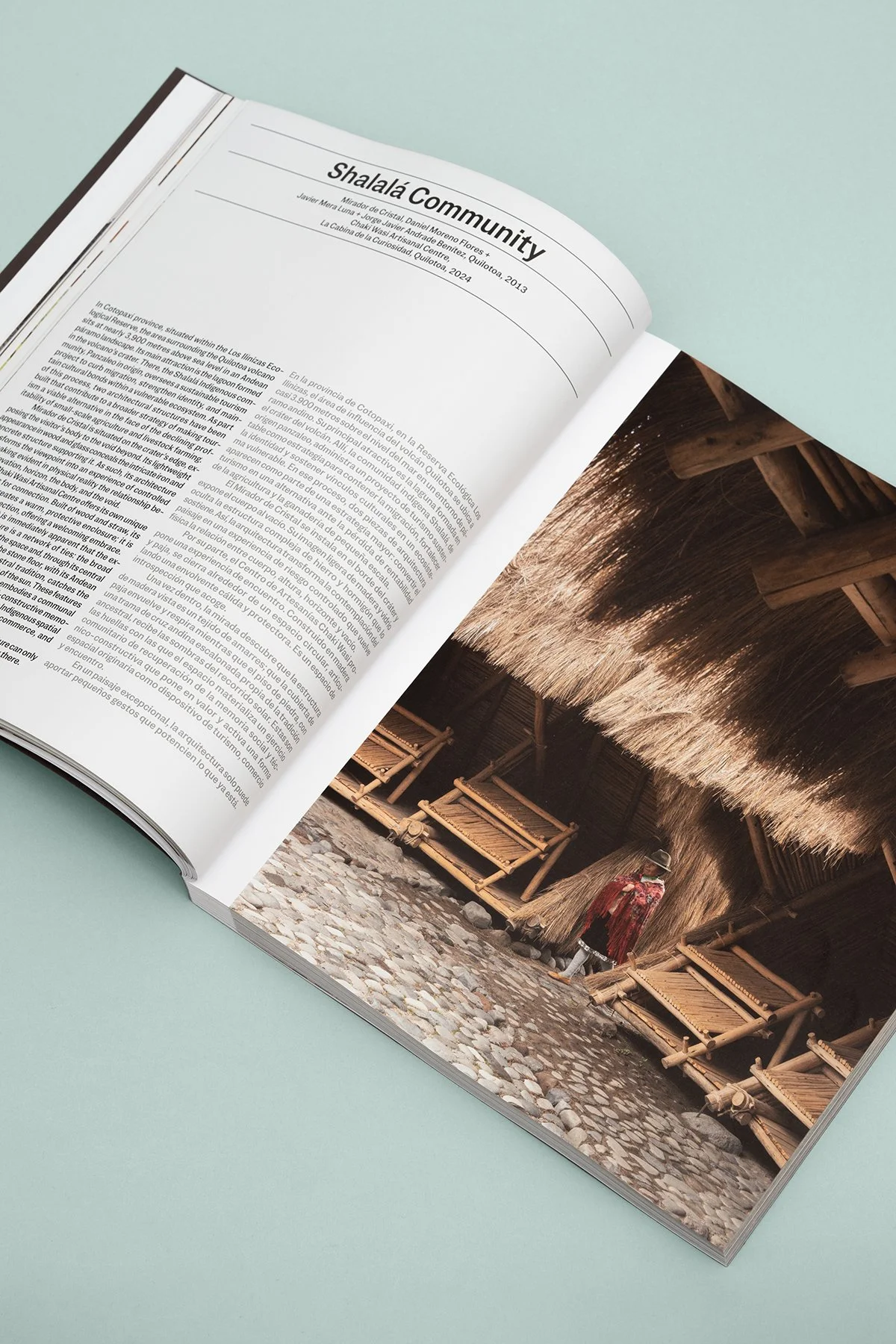
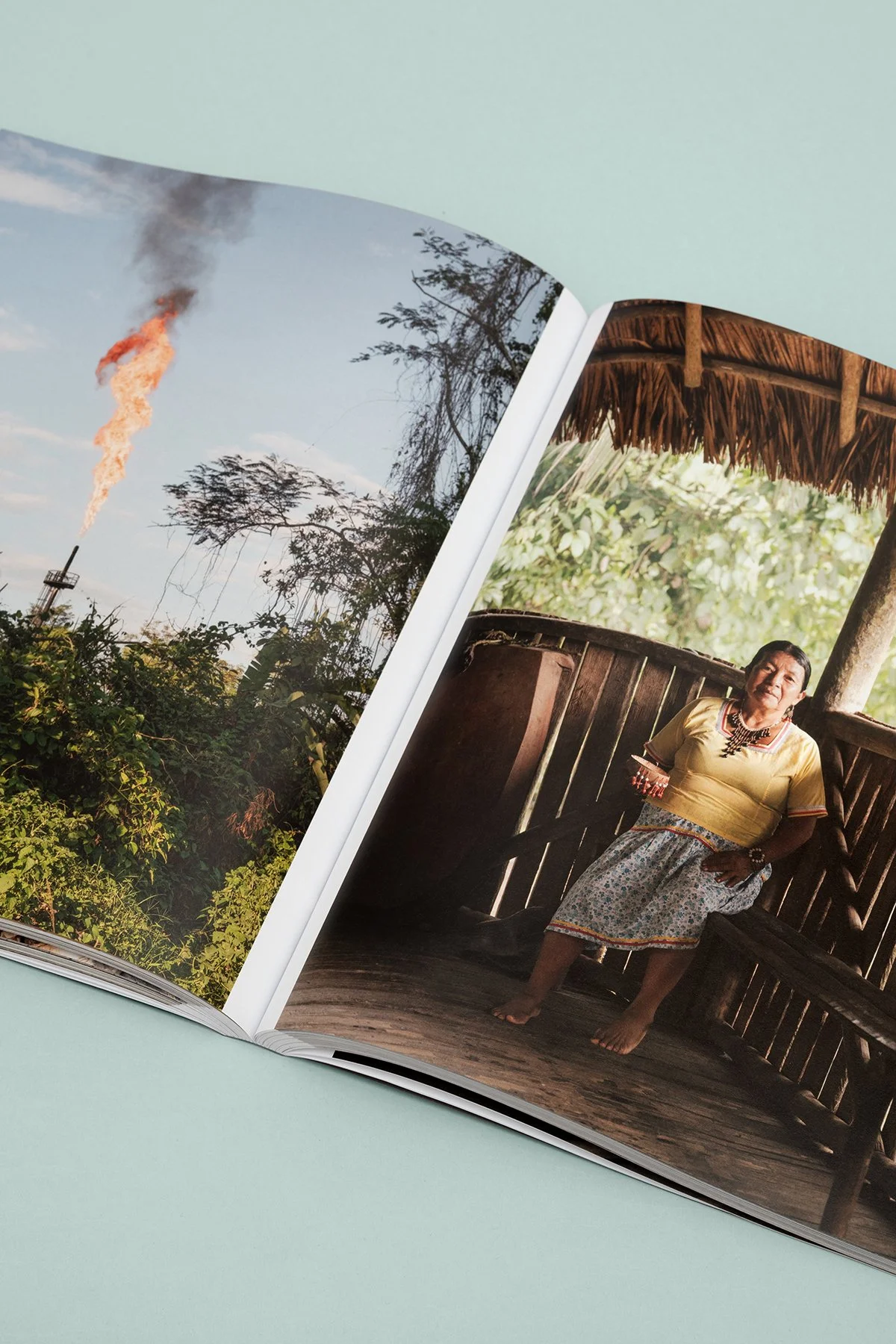
Pages: 272, with approx. 240 colour images
Language: English and Spanish (bilingual); Italian digital version available
First edition: 1,000 copies
Photographers: Francesco Russo, Luca Piffaretti
Writers: Shayarina Monard-Arciniegas, Ana María Durán Calisto, Irma Delmonte
Graphic design: Federico Barbon
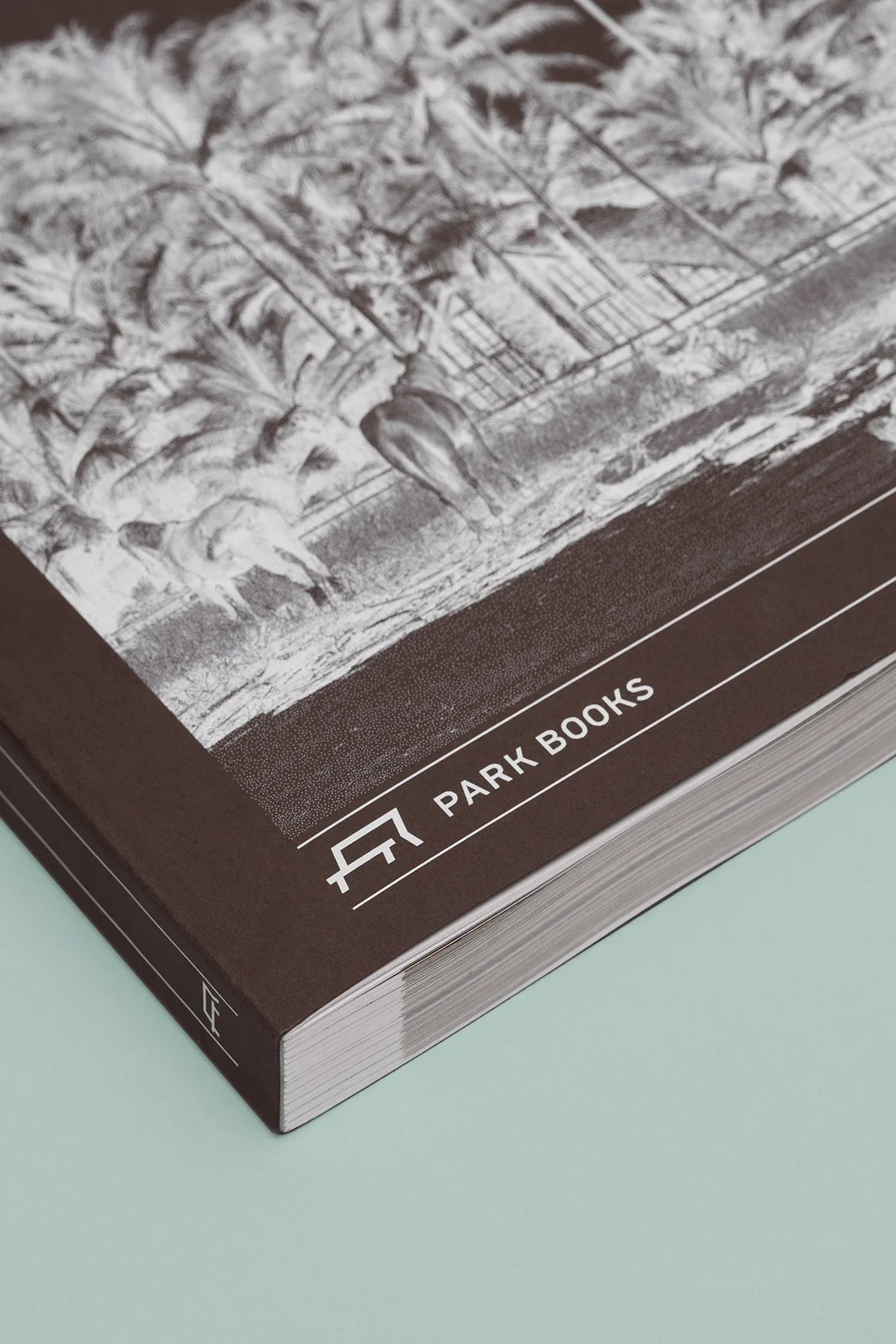
Publisher: Park Books -
The printed book is bilingual, in English and Spanish. An Italian digital PDF is also available to download at this link.
-
Yes, copies will be on sale at every event. Availability is limited, so we recommend reserving yours via the RSVP form. Pre-orders aren’t available for Zurich, where copies can be bought directly at the event.
-
Please get in touch and tell us a bit about what you have in mind. We’ll do our best to accommodate requests, subject to availability.
About
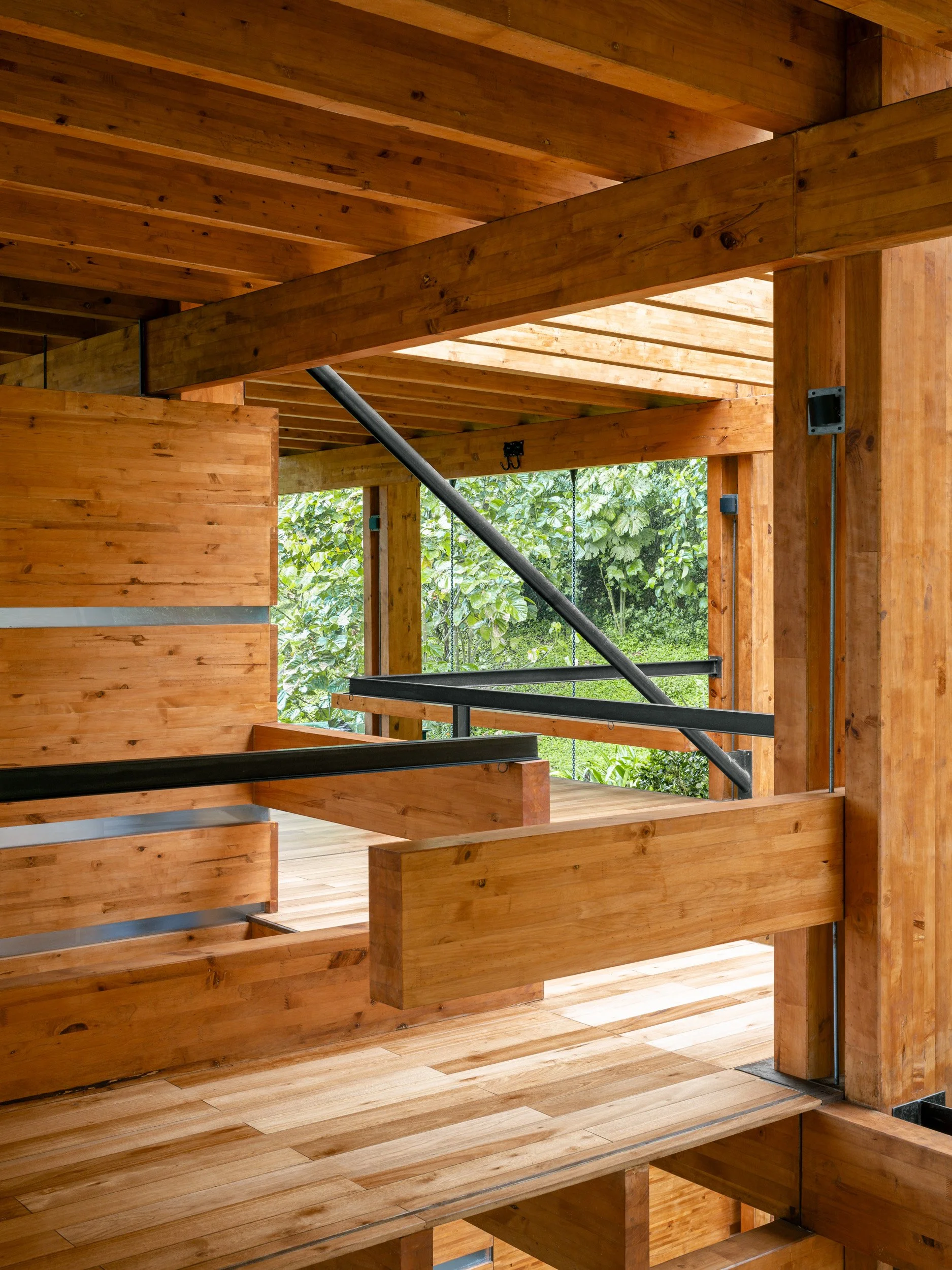
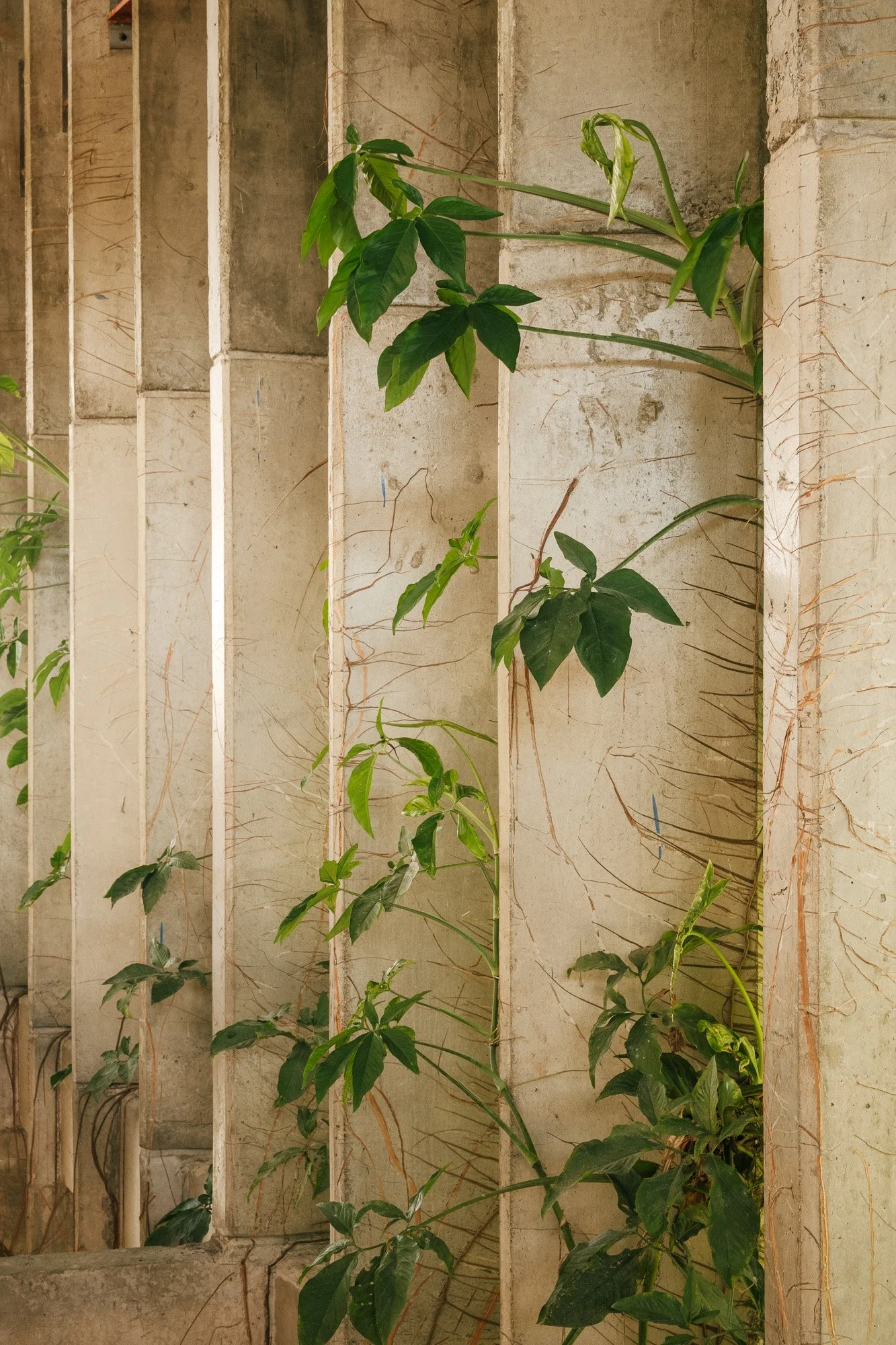
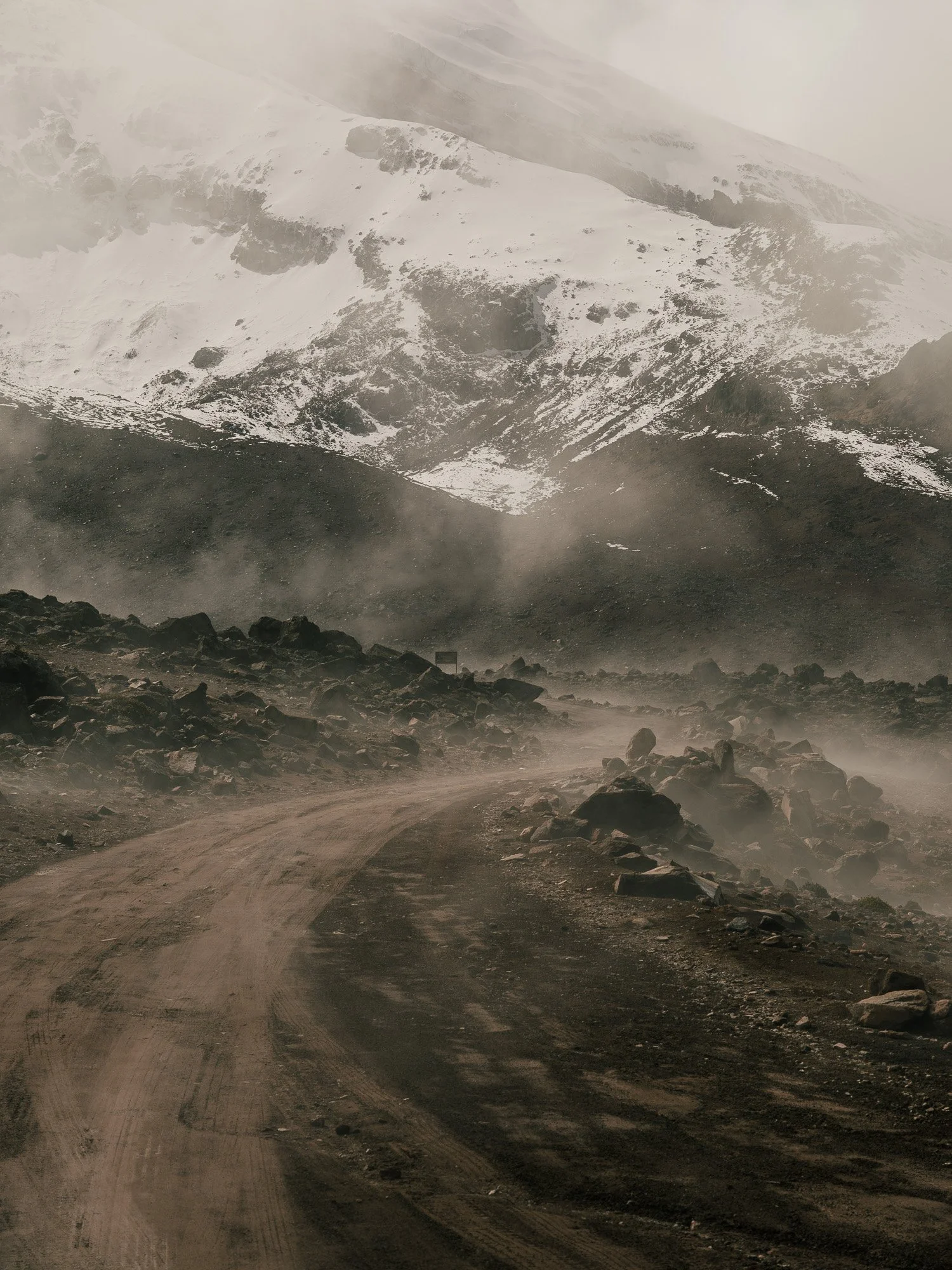
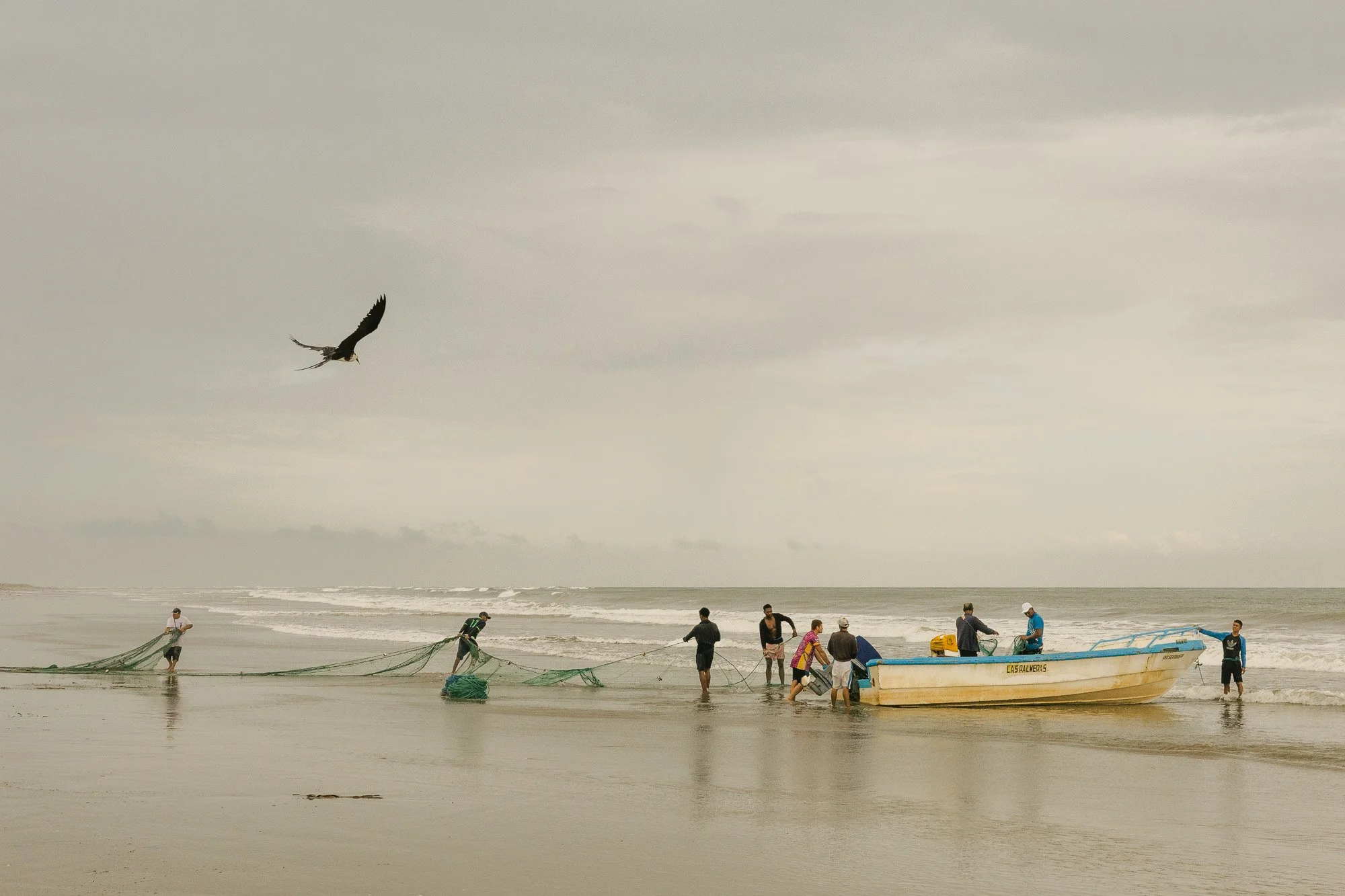
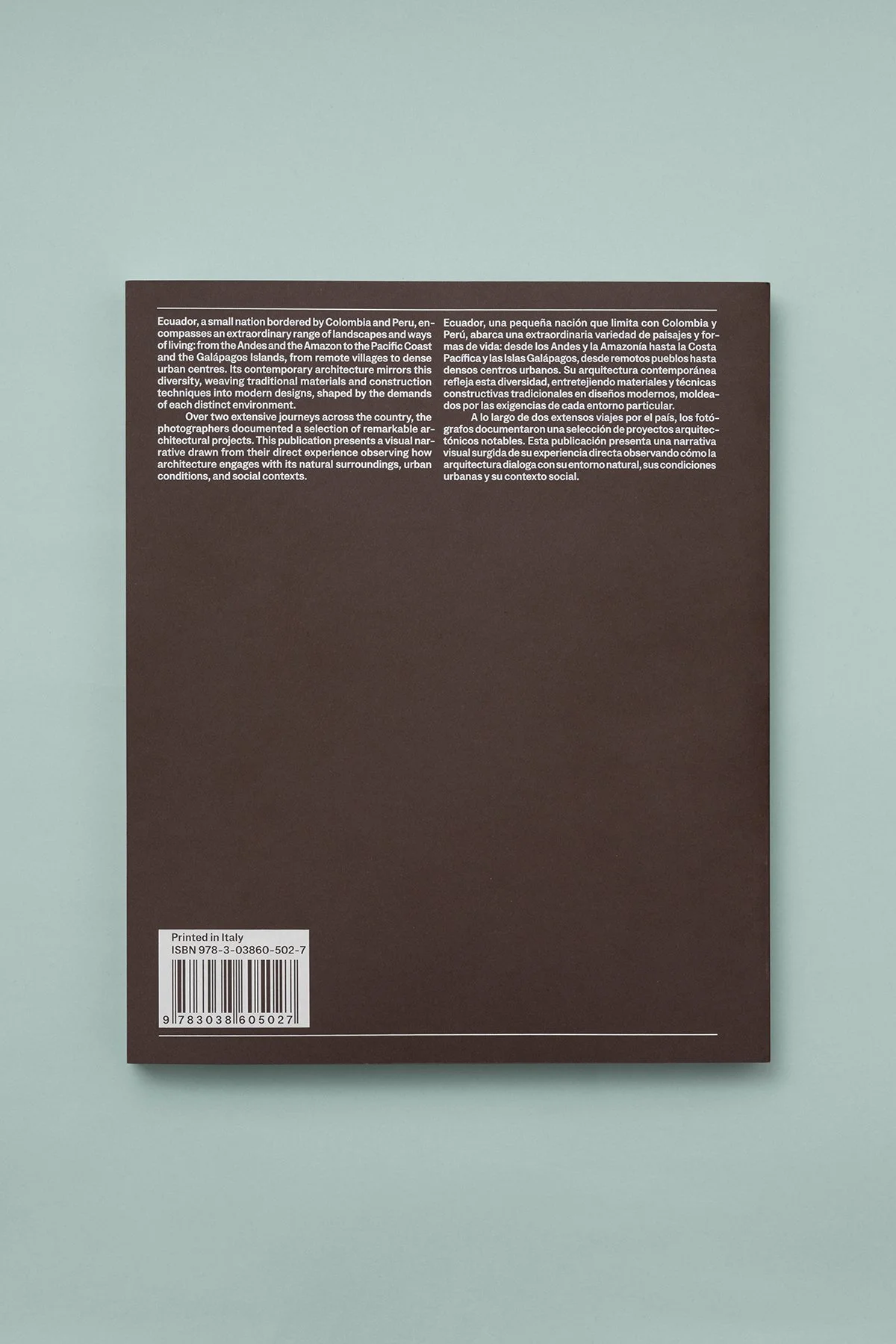
Ecuador, a small nation bordered by Colombia and Peru, encompasses an extraordinary range of landscapes and ways of living: from the Andes and the Amazon to the Pacific Coast and the Galápagos Islands, from remote villages to dense urban centres. Its contemporary architecture mirrors this diversity, weaving traditional materials and construction techniques into modern designs, shaped by the demands of each distinct environment.
Over two extensive journeys across the country, the photographers Francesco Russo and Luca Piffaretti documented a selection of remarkable architectural projects. This publication presents a visual narrative drawn from their direct experience observing how architecture engages with its natural surroundings, urban conditions, and social contexts.
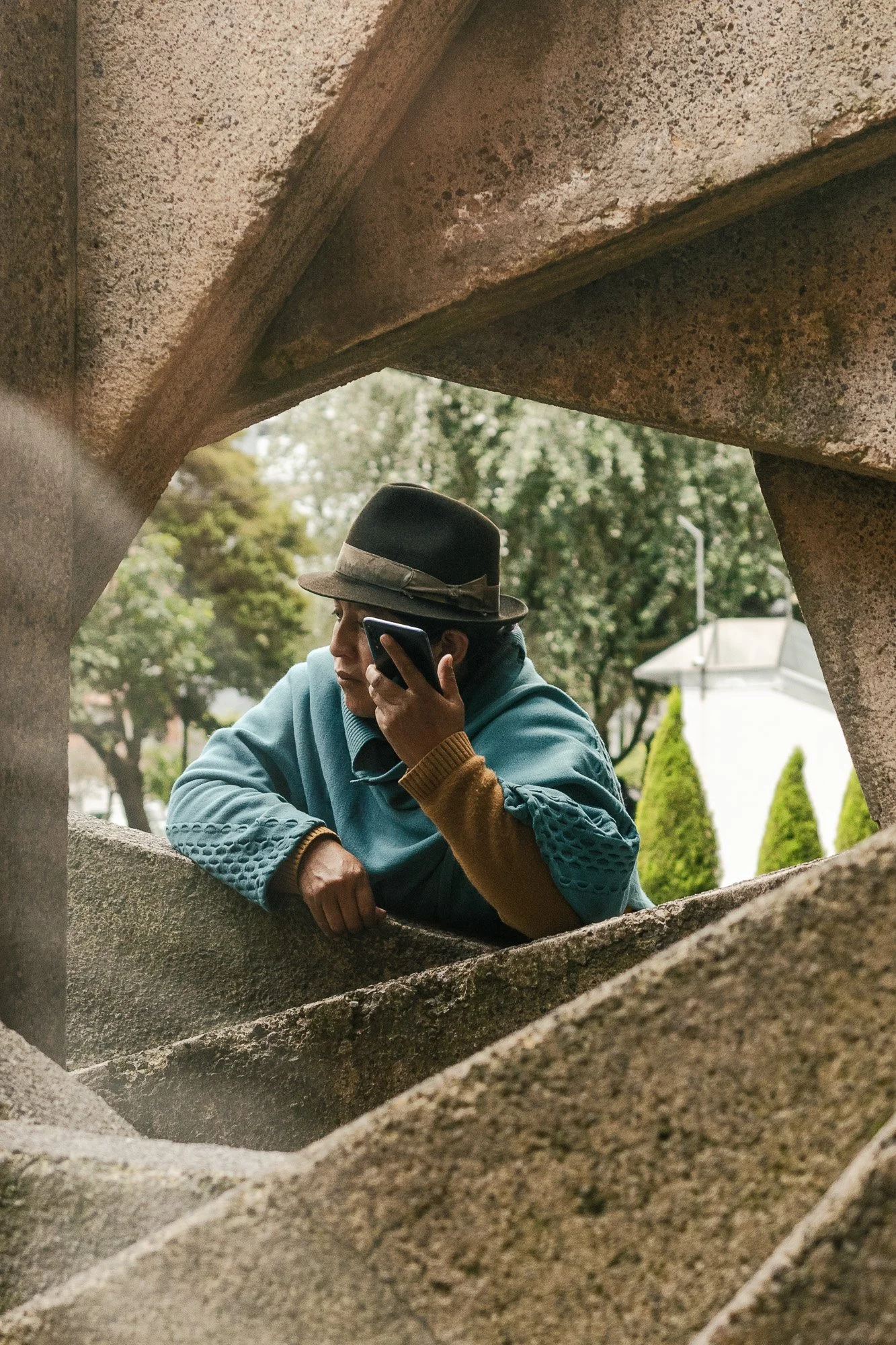
“This project is an effort to appreciate and rediscover our country, inspiring us to keep shaping our heritage and identity by showcasing the contrasts and nuances.”
— Aurelio Peñaherrera, Studio BLUR
The Photographers
and Authors
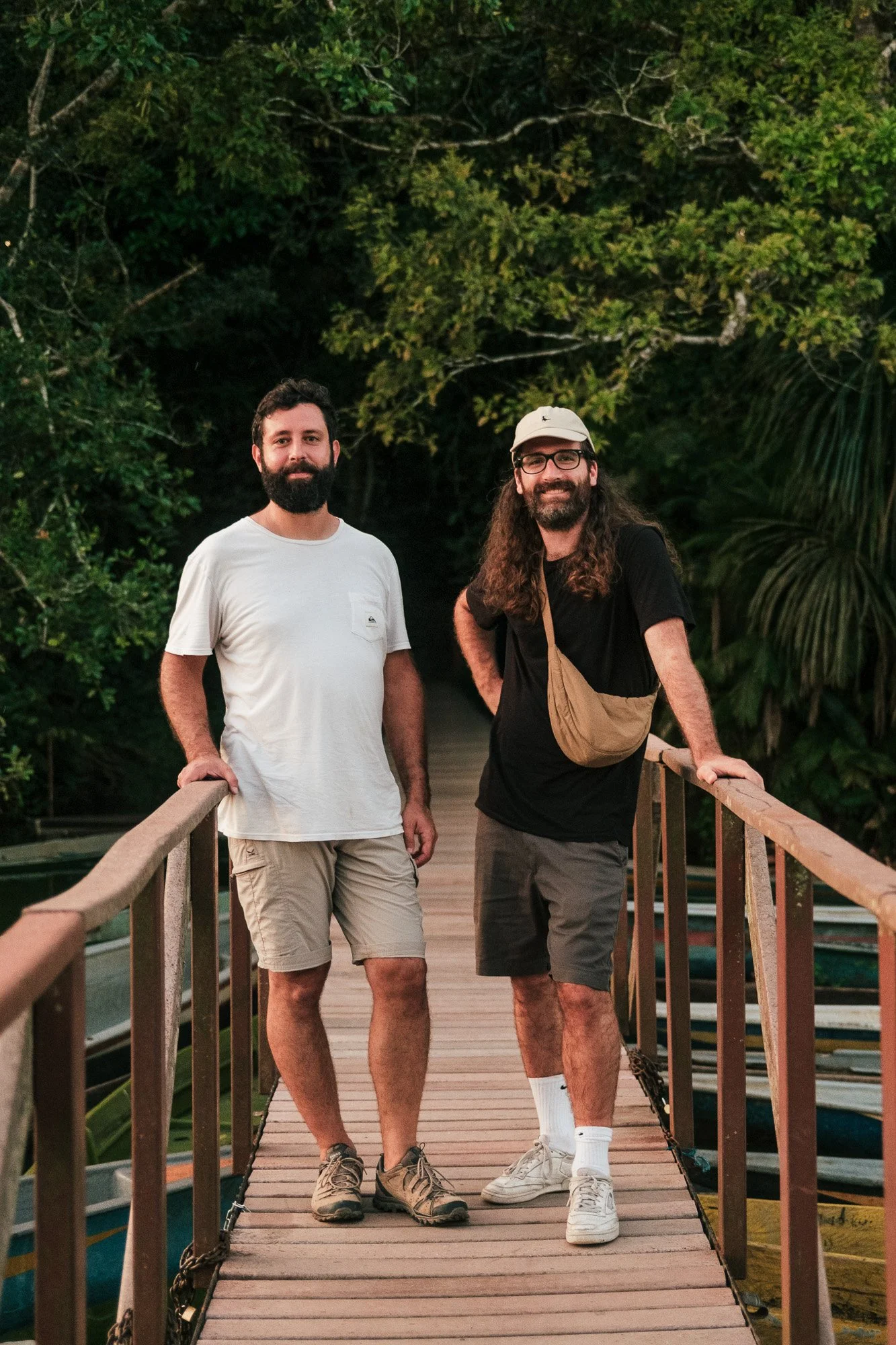
Francesco Russo and Luca Piffaretti are photographers documenting the built environment, working internationally for architecture and design practices and cultural institutions.
They are co-founders of Mass, a London-based collective of photographers building new visual narratives around the constructed landscape.
It was through this practice, developed across several group projects, that the creative collaboration behind this book on Ecuador first took shape.
Book images are © Matteo Pasin
“Innovative architecture in Ecuador is rooted to the earth; it sits on stilts; it floats: the buildings are well-adapted to their surroundings, much like the vernacular traditions from which they draw inspiration, traditions these buildings have revitalised and updated.”
— Ana María Durán Calisto,
introduction writer